|
|
| |
Ways of Learning and Knowing |
|
| |
|
|
Different ways of knowing, learning about, and responding to the natural world are central to Tapestry's mission. We work to understand how people use them, we structure them into our projects, and we apply them to the resources and publications we develop.
Contemporary culture understands the inherent power of diverse people and ideas, but focuses on content (subject matter) rather than process (ways of knowing). The result is multidisciplinary and multicultural efforts that rely solely on intellectual ways of knowing and are therefore only superficially diverse. We have learned that a focus on different ways of knowing and learning permits us to hold the center on creating, sustaining, and integrating real diversity of information in our work. Both the community learning processes we use and the learning we teach people how to receive from the land itself rely on integrating many different ways of knowing.
People in contemporary, modern culture use most or all of the different ways of knowing and learning -- as do all human beings -- but are uncomfortable with those that are not intellectual and often will not acknowledge them or use them in decision-making. So they have forgotten how to use them consciously and wisely, and how to integrate them with each other. The ancient relationship between humans and the earth are recorded in many different ways of knowing and learning because humans of other times were well-versed in them. People of today must learn how to use the whole palette of human understanding again, to access the records of human-nature relationship left us by others as well as to understand the different voices of nature for themselves.
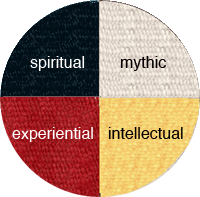
The model we use links the directions of the Circle with specific ways of knowing and learning in this way:
East is associated with Intellectual Ways of Knowing and Learning.
South is associated with Experiential Ways of Knowing and Learning.
West is associated with Spiritual Ways of Knowing and Learning.
North is associated with Mythic Ways of Knowing and Learning.
The Center is associated with Integrated Ways of Knowing and Learning.
|
|
|
|
|
 |
|
|